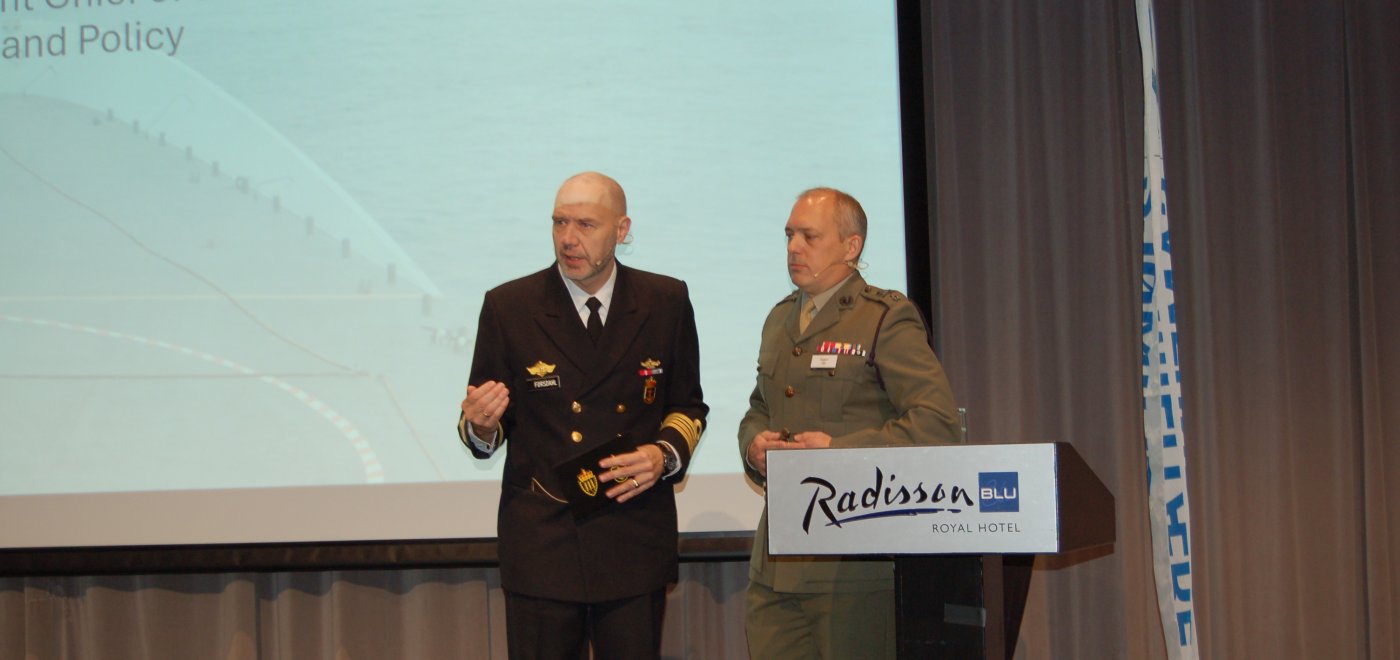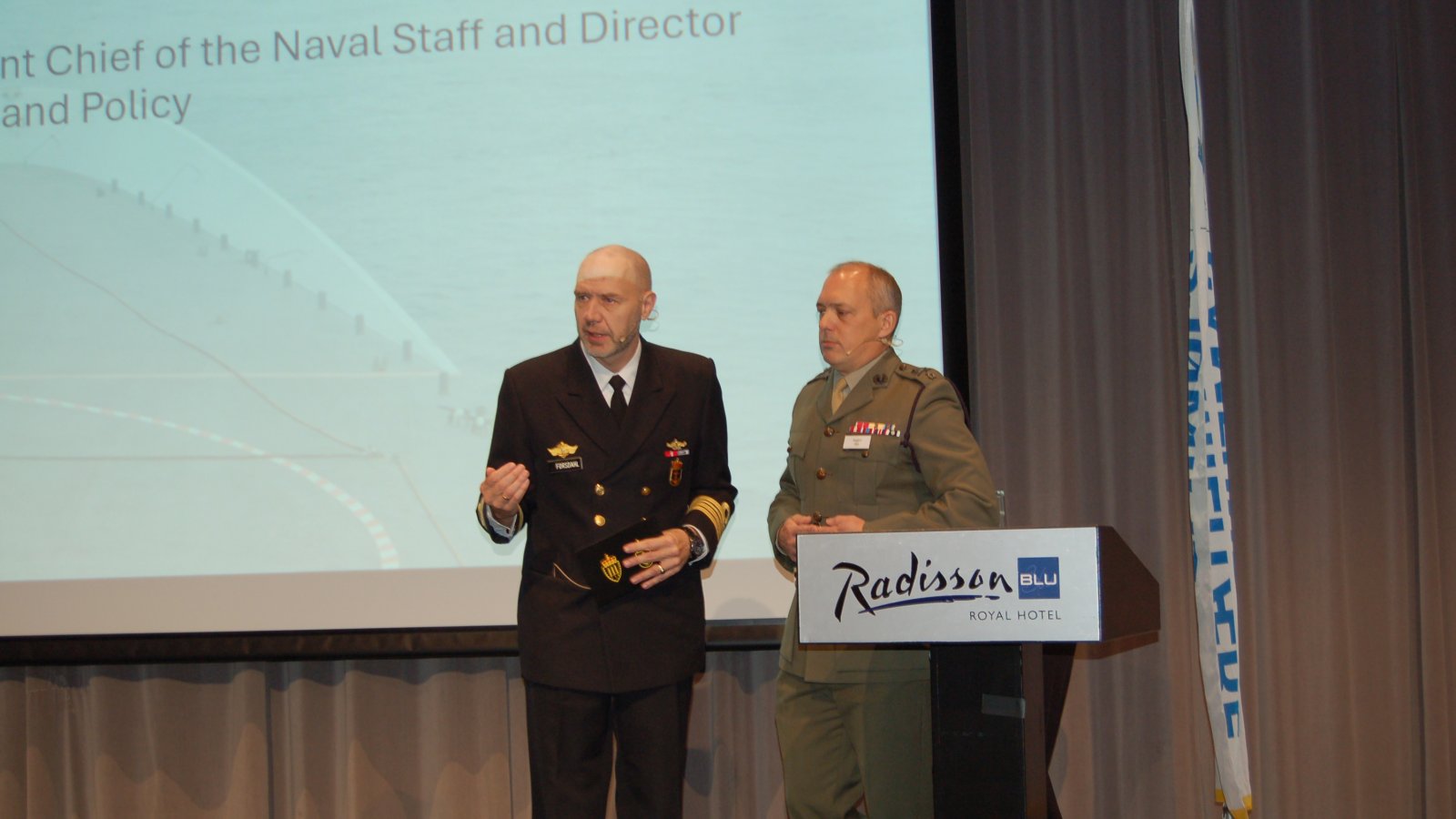
Before I begin, the First Sea Lord has asked me to pass on his regrets at not being able to be here personally, due to prior commitments. However, he is very much looking forward to reconnecting with many of you at the Atlantic Future Forum in Oslo in a few weeks’ time.
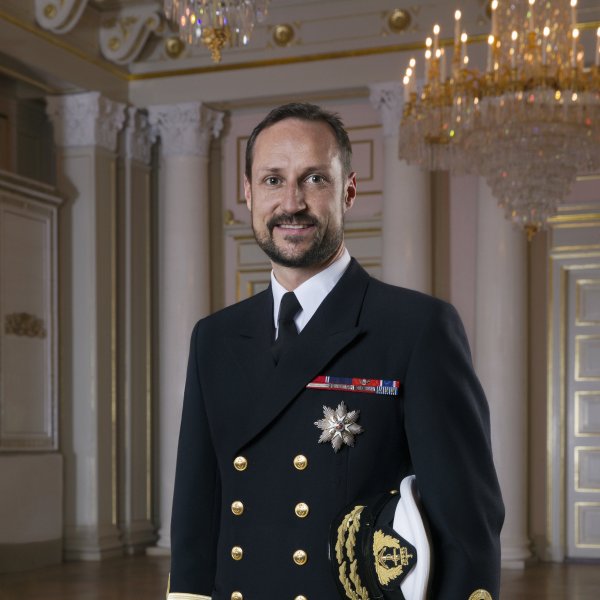
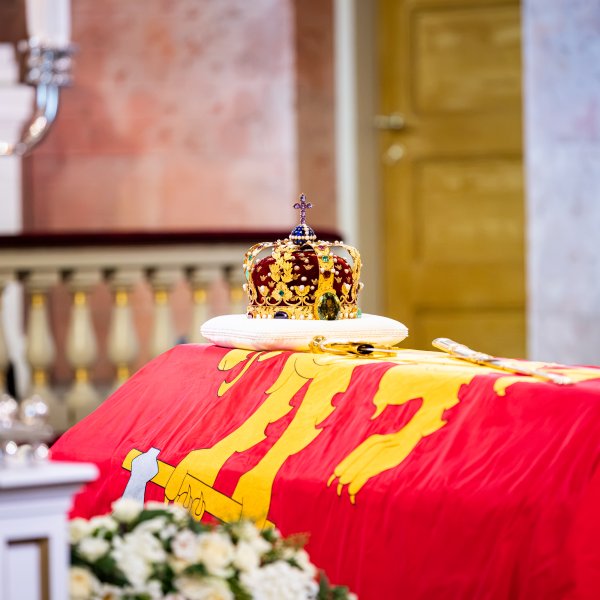
I would also like to pay tribute to your late King, Harald. Perhaps more than anyone, he embodied the enduring ties between our two nations. In 2012 he said, ‘united by our history and the North Sea, Britian and Norway are more than friends, we are family’. While he maintained many deep and personal connections to the UK, a key part of his affinity with our country was through the Royal Navy. It was a relationship that stretched back to the Second World War and endured as King Harald spent 45 years serving as a much loved Honorary Colonel in the Marines.
The legacy that he leaves behind… the spirit of co-operation between the UK and Norway… is also why I am here today. Because our task is it not just to maintain that relationship… it is to deepen it.
And the reason why we must do so is simple: our relationship really matters – and not just to our two nations. It matters for our collective defence. It matters to all of Europe. And it matters to NATO.
Our relationship is as strong today as it ever has been. Not just because the current security environment demands that we work together. But because we are bound by our shared geography, by our shared values and our shared interests. Because we have learned from our shared history that we will only succeed if we work together. We are both maritime nations who recognise the fundamental importance of sea power. Our prosperity and security have for centuries depended on it. Our influence around the world has long been carried on ocean currents. Throughout our history, our national survival has repeatedly rested on our control of the seas around us.
No chapter in our history demonstrates that more powerfully than the Second World War. In the UK, we have just marked the 86th anniversary of the Battle of Britain. Rightly, that campaign, and the courage of British and allied pilots, continues to be celebrated. It denied Goering’s Luftwaffe air superiority and prevented a Nazi invasion.
But the truth…is that Hitler’s decision to abandon Operation Sealion had already largely been decided…thanks to the campaign fought in Norway's waters and fjords. Between April and June 1940, British, Norwegian, French and Polish forces fought a bitter campaign on land, in the air and – decisively – at sea. Allied submarines struck German transports and warships along the Norwegian coast. Norway’s coastal defences sunk the Germany heavy cruiser Blücher. They also dealt a serious blow to the Königsberg, which was sunk the next day right here in Bergen harbour by the Fleet Air Arm.
At Narvik, Royal Navy destroyers fought at close quarters, and HMS Warspite and her escorts drove back the remaining German fleet. The Royal Navy suffered difficult losses. The wider campaign failed. Norway was occupied. But the price paid by the German Navy was severe – and the Luftwaffe suffered a similar fate over Britain just a few months later.
Together, these two battles showed Hitler that an invasion of Britain could not succeed.
While the Norway campaign was ultimately a painful defeat for the allies, the Norwegian people did not succumb to their occupation. Instead, they offered fierce defiance. And through that defiance an even deeper partnership was forged between our two nations. The Royal Norwegian Navy did not give up. It continued the fight from British ports.
Norway’s merchant fleet played an equally integral role in helping us sustain the fight.
By 1942, approximately 40 per cent of British fuel was being transported by Norwegian tankers. Your sailors, soldiers, and resistance fighters crossed one of the world's most unforgiving seas to maintain a lifeline between Britain and your resistance movement.
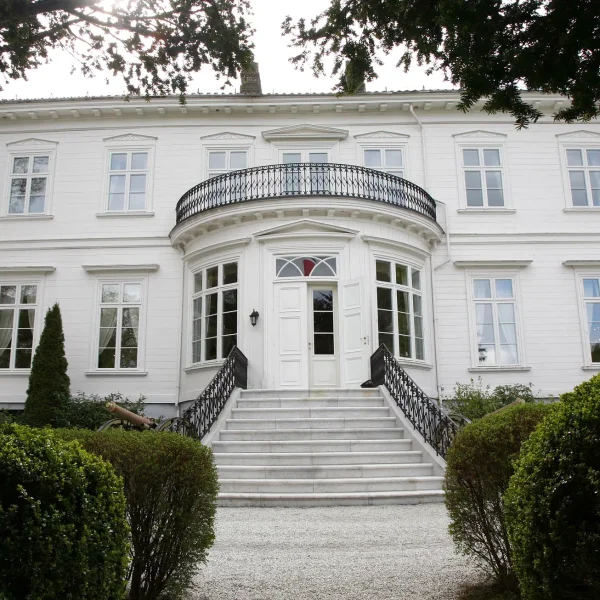
At the heart of that effort was Shetland. And at the heart of Shetland was Lunna House. Following the German invasion in 1940, it became the first headquarters of the operation remembered as the Shetland Bus. It was the base from which brave Norwegian crews carried agents, weapons and supplies into Norway, and brought refugees out. It supported the testing of one-man submarines and the planning of operations against German targets. It housed resistance figures including Leif Larsen.
These missions were conducted in darkness, in winter, across violent seas, and under constant threat of discovery. They required exceptional courage. Yet courage alone was not enough. The success of Shetland Bus rested on a profound trust that existed between Norwegians and Britons. British and Norwegian personnel shared intelligence, equipment, bases and a purpose. They combined local knowledge with shared resolve. They operated as partners because neither country could achieve the mission alone.
It is for this reason that Lunna House remains embedded in the collective memory of our two nations. It reminds us that close co-operation is not a diplomatic nicety. When two nations work as closely together as we did then – and are doing again now – that is itself a powerful weapon.
And so, it’s unsurprising that when our two governments came together in December last year, to sign a major new defence pact, we decided to name it…Lunna House. The choice of name was both deliberate and significant. 80 years ago, our nations came together in Northern waters to resist aggression and defend freedom.
The Lunna House agreement embodies that same spirit, applied to the shared threats we now face. It brings our navies closer together, so that we can police the North Atlantic, strengthen our anti-submarine warfare, and protect the critical undersea infrastructure on which our societies depend.
Through Lunna House, we have laid the foundations for a combined and integrated fleet of Type 26 frigates. Together, we will possess the world’s most capable ASW Warship. By doing this, Norway has made a generational commitment. It has sent a clear signal to Russia, alongside us in the UK, that we will not be intimidated. The opportunity this provides both of our navies cannot be overstated. The Type 26 partnership was more than just a procurement decision. It was a choice… to strategically align our navies, our industries, and our nations.
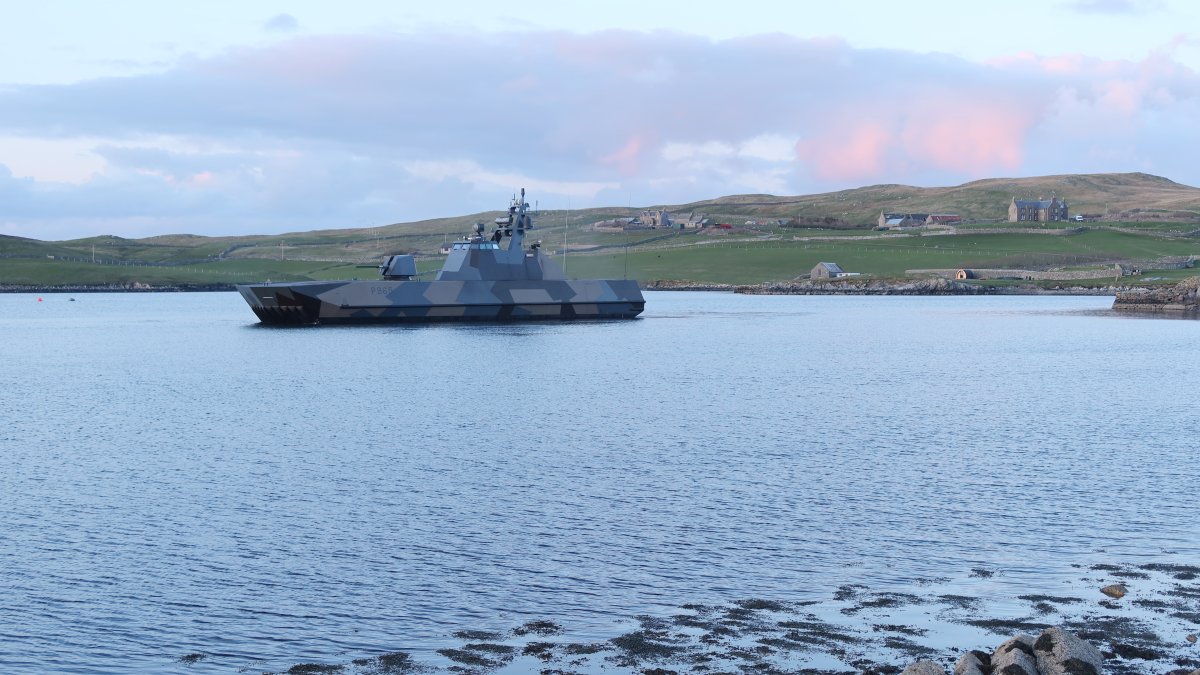
Up until now, navies have set their ambition at interoperability – working together effectively, even when our equipment and systems are different. But now we have the potential to go much further. To become truly interchangeable. Not just two fleets working together… two fleets able to operate as one. We have demonstrated an unprecedented level of ambition between our navies. And the Type 26 is only one part of that.
Our navies are working on ASW helicopter co-operation, seeking common solutions that will improve future Type 26 operations. As part of our shift to the Hybrid Navy, we are exploring how our crewed and uncrewed systems can work together in the underwater battlespace, drawing lessons from current conflicts and creating opportunities for joint development and experimentation.
Through Atlantic Bastion…Norway is helping us to build a defensive sensor network across the North Atlantic….To monitor, detect and neutralise subsurface threats. We are progressing common programmes, including Joint Commando Craft and offshore support ships for mine hunting, stingray torpedo and the Naval Strike Missile.
Norway has been invited to join the Sea Ceptor User Group, opening another route to shared learning and integration. And practical co-operation is already happening on operations. That includes last year’s CSG deployment and now the multinational response to the choking of the Strait of Hormuz. Together, these show how our partnership is going from strength to strength in a world that will need it.
And there is perhaps no clearer evidence of that than the growing presence of our Royal Marines Commandos, operating side by side with Norway in the Arctic. And it is there in the northern tundra, fjords and islands that we help create conditions for maritime operations to succeed. Of course, we still have much to do to realise the full ambition of the Lunna House Agreement. But the strength of our partnership is plain for all to see. It is a blueprint that our allies across the alliance want to emulate.
And it is also the basis for everything we are trying to achieve through the Joint Expeditionary Force and the Northern Navies initiative, which I know Norway is helping to shape alongside us. Through that agreement, which we hope to finalise in Oslo in a few weeks’ time, we aim to move beyond episodic activity towards a persistent and increasingly, integrated maritime force.
The ambition is to recreate a more credible and effective vanguard force for NATO in the North. Navies that train together, exercise together, plan together and, if necessary, fight together. To move towards common systems, shared data and digital networks, sensors, weapons, logistics and stockpiles.
Our ambition is high – but the growing threat demands it. A family of Northern Navies, stronger than the sum of its parts. Our co-operation also stretches south, to the Black Sea and to Ukraine… through the Maritime Capability Coalition, an initiative which both of our nations should take immense pride in. Launched in December 2023, the coalition has brought together 22 nations to deliver equipment, training, infrastructure and long-term support to Ukraine's Navy.
Through it, we are helping Ukraine sustain the fight today – prioritising air defence from the sea, coastal defence and strike capabilities. But just as importantly, we are helping to ensure Ukraine can win the fight tomorrow, by building a modern Navy aligned with NATO standards. At the same time, we are learning too. The coalition has become a hub for innovation, and Ukraine has demonstrated how a force willing to adapt quickly, employ ingenuity and embrace new technologies can overcome a force that on paper was deemed far superior.
We should continue to learn carefully from Ukraine, while recognising that the conditions of the Black Sea are not the same as the North Atlantic, and northern waters. And we must also remember that what happens in the Black Sea does not stay in the Black Sea. Which brings me back to the waters closest to Britain and Norway. Just as they were eighty years ago, the North Atlantic and High North have regained strategic prominence. The Norwegian Sea, the Arctic and the northern approaches are no longer seen as distant theatres. They are the gateway to our backyard; they form our sea border with Russia. This is where focus must be.
Where Russian surface and sub-surface activity continues to pose a persistent challenge, both for the protection of our critical national infrastructure and for the UK particularly, our continuous at sea deterrent. Russia retains advanced submarines, long-range weapons and specialist deep-water capabilities. It is increasingly active in our domain, and we are both spending increasing amounts of time and resource monitoring Russian vessels and the shadow fleet. We know that Russia is probing us for weakness, and that it seeks advantage in the grey zone.
Its activity below the threshold of open conflict, including around critical infrastructure, requires more vigilance, improved awareness and closer allied co-ordination. None of this makes confrontation inevitable, and nor do we seek it. But it does make our partnership, our co-operation, even more important. It is through this, that we send a clear signal to Russia: that an attack on one nation will meet the combined strength of many. That is what NATO stands for… and the commitment runs through the veins of our UK- Norway relationship.
Our renewed partnership is how we build a persistent, integrated ASW force in the North Atlantic and High North. It ties together our warships, aircraft, helicopters, Commandos, sensors, uncrewed systems and industries. It strengthens our ability to root out and neutralise hostile activity, protect reinforcement routes, defend critical undersea infrastructure and safeguard the maritime arteries that our countries depend on.
Most importantly, it demonstrates that we are organised and prepared, that we are determined to uphold security and stability in the region. And that the cost of any aggression against us will be far greater than any advantage our enemies hope to gain. To succeed, we must look to the future, but also to our past.
In 1940, Britain and Norway faced a tyrant who sought domination over Europe.
We responded with courage, we denied our enemy sea control – and we did so… together. From the operations room at Lunna House, our people learned that geography binds us together, but a shared purpose makes us stronger. As we navigate these uncertain times and troubled waters, the message that the Royal Navy and the Royal Norwegian Navy have sent is clear:
We will meet the challenge as we have before. Together. Thank you.